
18 August 2026
Screen Time for Kids: 7 Do's and Don'ts That Actually Work (2026)
Screen Time for Kids: 7 Do's and Don'ts That Actually Work (2026)
posted on : 31 July 2026
You hand over the tablet so you can finish cooking. Twenty minutes later comes the negotiation, then the meltdown, then the guilt-scroll at midnight: how much screen time is too much?
Here's the truth nobody posts in the parent group: screens are not the enemy, and you are not failing. Children under 8 now average about two and a half hours of screen time a day (Common Sense Media's 2025 census) — this is simply the world we're all parenting in.
What separates the harmful kind from the helpful kind is not the clock. It's a handful of habits. These 7 do's and don'ts — each backed by research, none requiring superhuman willpower — are the ones that actually move the needle.
In this guide:
How Much Screen Time Is OK for Kids, by Age?
For children under 2, the expert answer is close to zero (live video chat is the exception); for ages 2 to 4 it is no more than about an hour a day; and from 5 onwards, quality and balance matter more than any single number.
| Age | What the experts advise |
|---|---|
| Under 18 months | Avoid screens, except live video chat with people who love them — guidance the American Academy of Pediatrics has held for years |
| 18-24 months | The WHO recommends no sedentary screen time before age 2; if you introduce any, keep it high-quality and watch it together |
| 2-4 years | No more than about 1 hour a day — and less is better (WHO); co-view whenever you can |
| 5-8 years | No single magic number — judge by the 5 C's below, and protect sleep, play, homework and reading first |
📌 Screenshot this table — it settles the "but how much?!" debate in one image.
Notice the AAP itself has moved away from pure minute-counting toward a quality framework called the 5 C's. Which brings us to the list.
The 7 Do's and Don'ts at a Glance
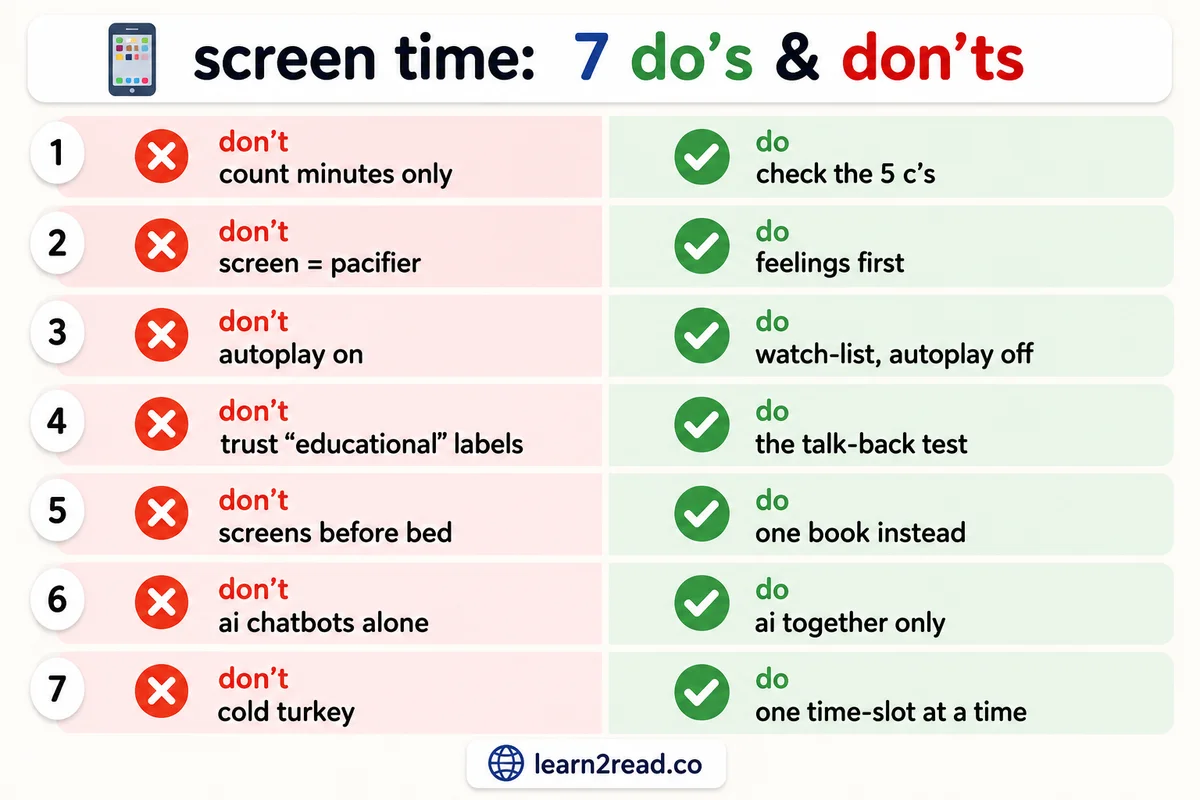
| ❌ Don't | ✅ Do instead |
|---|---|
| 1. Judge screen time by minutes alone | Run it through the 5 C's |
| 2. Use a screen as the default soother | Feelings first — the screen is not a pacifier |
| 3. Leave autoplay on | Build a watch-list; autoplay off |
| 4. Trust the word "educational" on the box | Apply the talk-back test, and watch together |
| 5. Allow screens in the hour before bed | Swap the pre-bed video for one book |
| 6. Hand over AI chatbots unsupervised | Treat AI like a stranger: together only |
| 7. Go cold turkey after a guilt spiral | Change one time-slot at a time |
The Do's and Don'ts, Explained
1. ❌ Don't judge screen time by minutes alone → ✅ Do run it through the 5 C's
Thirty minutes of a slow, thoughtful story and thirty minutes of frantic unboxing videos are not the same thirty minutes. That's why the American Academy of Pediatrics now guides parents with the 5 C's of media use: Child (how does media affect your child?), Content (is it actually good?), Calm (can they settle down without it?), Crowding out (what is it replacing?), and Communication (do you talk about what they watch?).
Do this tonight: ask one question — what did this half hour crowd out? If the answer is sleep, play, or time with you, that's the slot to fix first.
2. ❌ Don't use a screen as the default soother → ✅ Do put feelings first
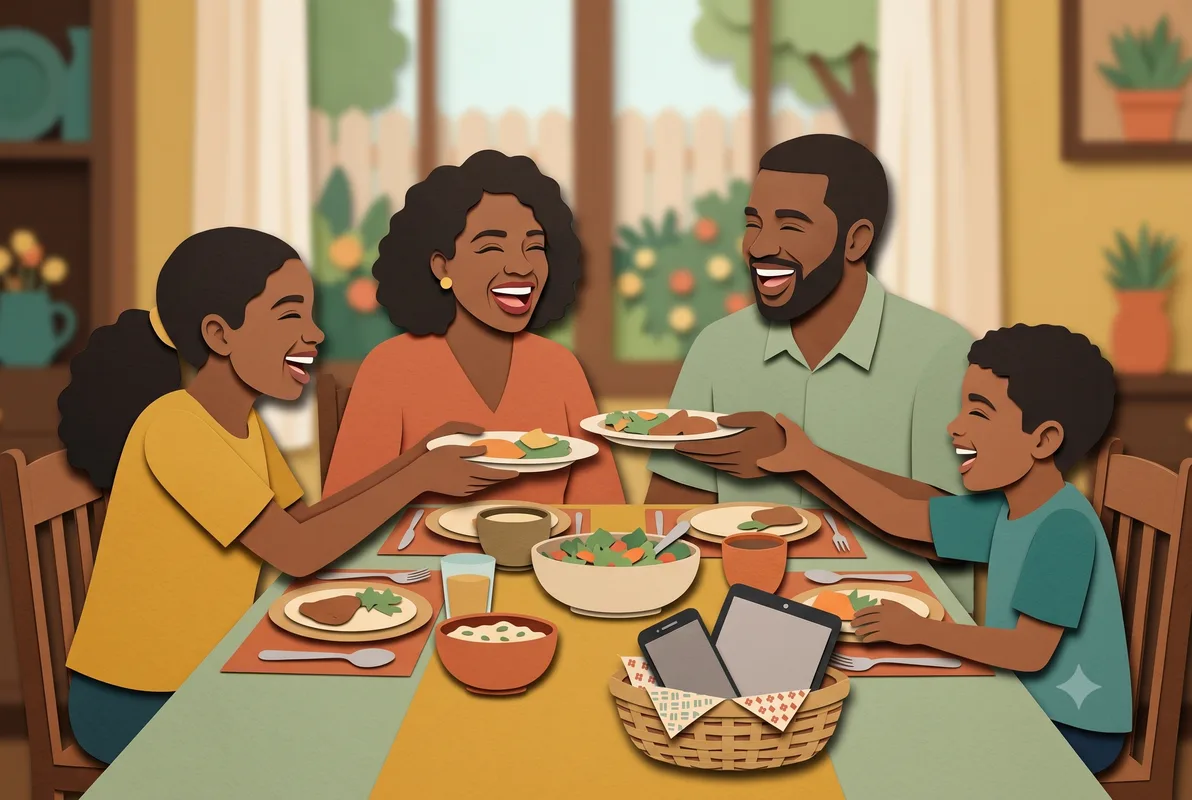
About 1 in 5 young children now use mobile devices to calm down, get through meals, or fall asleep (Common Sense Media, 2025). It works in the moment — that's the trap. A child who is always soothed by a screen misses the practice of calming down on their own, and mealtime chatter (prime vocabulary-building time) goes quiet.
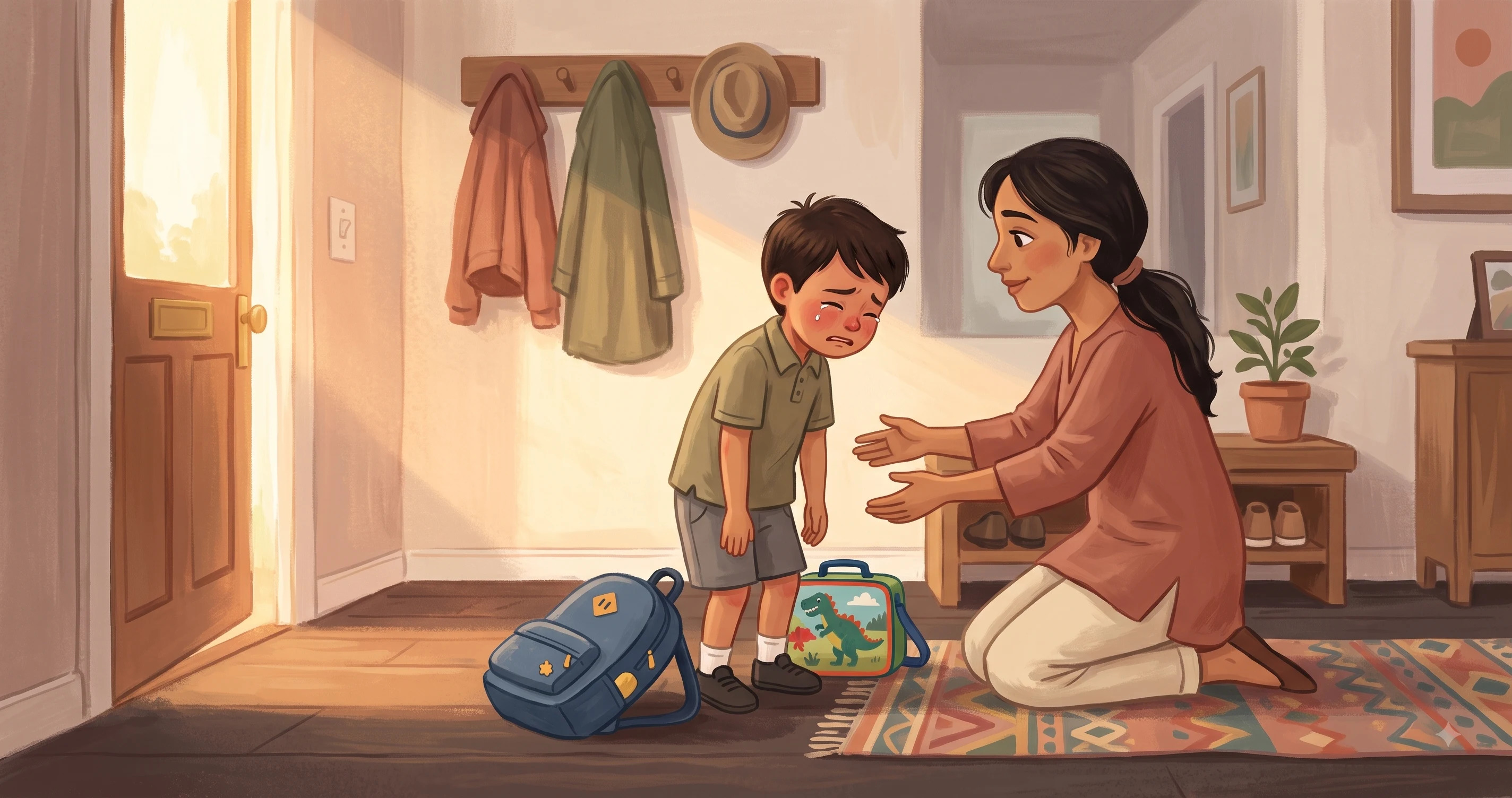
Do this instead: name the feeling first — "you're angry the tower fell." Keep one boring-but-reliable calm-down alternative in reach: a favourite book, play-dough, a cuddle. Screens can be a sometimes tool; they shouldn't be the only one in the box.
3. ❌ Don't leave autoplay on → ✅ Do build a watch-list
YouTube now reaches children before their second birthday — 62% of parents of under-2s say their child watches it, up from 45% in 2020 (Pew Research Center, 2025). The problem usually isn't the first video you chose. It's the fifth one the algorithm chose.
Do this instead: turn autoplay off (Settings → Autoplay → off), build a playlist of shows you've actually seen, and treat "the end of the episode" — not a clock — as the natural stopping point. Endings cause fewer meltdowns than timers.
4. ❌ Don't trust the word "educational" → ✅ Do apply the talk-back test
"Educational" is a marketing label, not a guarantee — app stores are full of flashcard apps that are closer to slot machines than teachers. A simple filter: does it ask your child to think and respond, or only to watch and tap? Content that pauses, asks, and waits builds more language than content that just plays.
Do this instead: watch one episode of anything new with your child (most parents co-view YouTube at least sometimes — keep that habit), and talk during it: "why did she hide the key?" Your voice is the ingredient that turns screen content into learning.
5. ❌ Don't allow screens in the hour before bed → ✅ Do swap the pre-bed video for one book
The hour before sleep is when screens quietly do their worst — bedtime stretches, sleep shortens, and tired children learn worse the next day. It's the clearest case of the AAP's "crowding out": the video isn't just filling time, it's replacing the single highest-value slot in your child's day.
Do this instead: one paper book, every night, same time. A 2019 Ohio State University study found children read five books a day enter school having heard about 1.4 million more words than children who are never read to (study here). Even one book a night, kept sacred, compounds into a vocabulary no app can deliver — and it's the gentlest bedtime routine ever invented. (More on raising a book-lover in our guide to making kids love reading.)
6. ❌ Don't hand over AI chatbots unsupervised → ✅ Do treat AI like a stranger: together only
This one wasn't in any parenting book you own: about 1 in 10 parents of 5- to 12-year-olds say their child already uses AI chatbots like ChatGPT or Gemini (Pew, 2025). AI can explain, rhyme and role-play — and it can also be confidently wrong, oddly personal, or simply not built for children.
Do this instead: the stranger rule. Your child wouldn't chat alone with a stranger, however friendly; the same applies here. Sit together, ask it things side by side, and teach the golden sentence early: "AI can be wrong — let's check." We've written a full breakdown of the advantages and disadvantages of AI in education for young kids if you want to go deeper.
7. ❌ Don't go cold turkey after a guilt spiral → ✅ Do change one time-slot at a time
42% of parents admit they could do a better job of managing their child's device use (Pew, 2025) — so if that's you, you're in the majority, not the minority. But the Sunday-night "NO MORE SCREENS EVER" declaration usually collapses by Wednesday, teaching everyone that the rules are negotiable.
Do this instead: pick ONE slot — usually dinner or the pre-bed hour — and make only that one screen-free this week. Replace it, don't just remove it: phonics games, drawing, helping cook. Hold it for two weeks, then take the next slot. Slow is what sticks.
The One Swap That Changes Everything
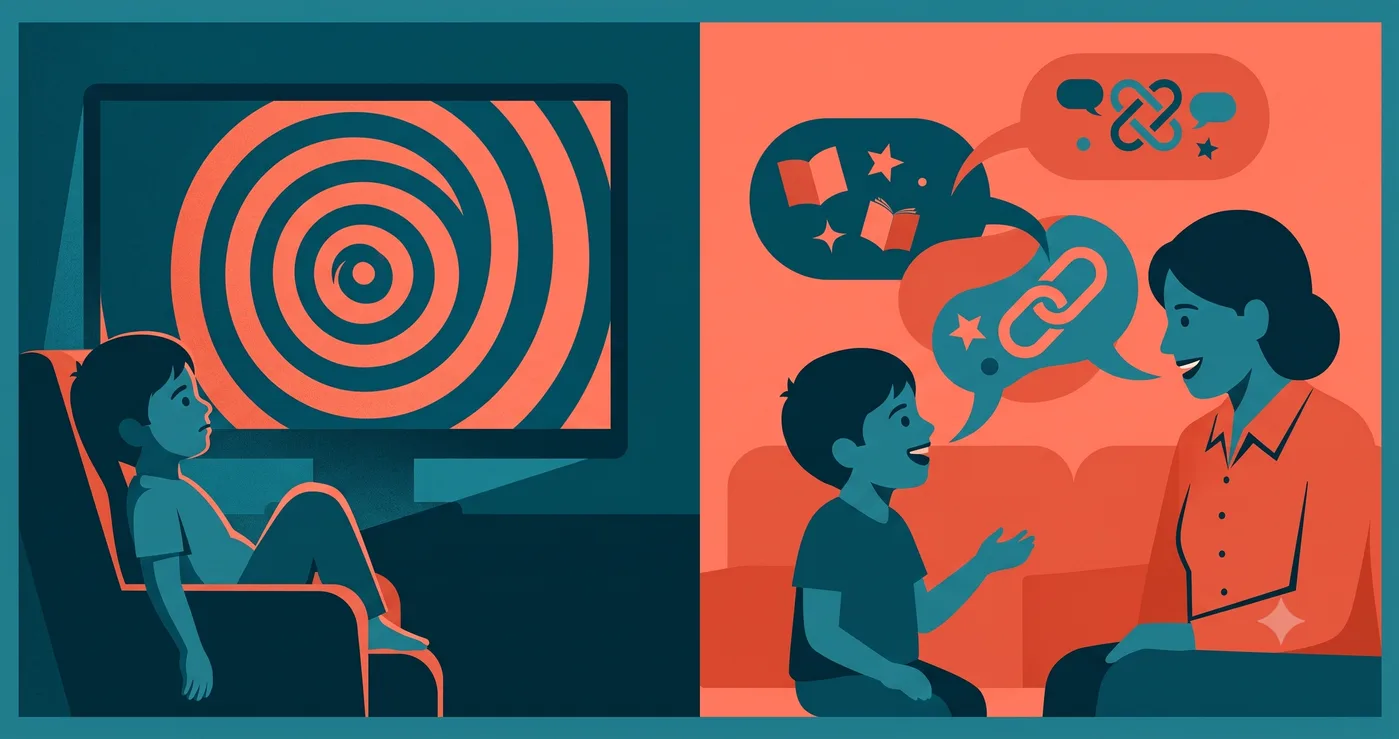
If you change nothing else, change this: swap some passive watching for screen time that talks back.
Researchers at Temple University showed toddlers could learn new words from a live video chat but not from a pre-recorded video of the very same speaker — the difference was that the live person responded to them (the "Skype Me!" study, Child Development). Young brains learn language from interaction, not exposure. It's why video-calling grandparents doesn't really belong in the same category as autoplay cartoons.
It's also exactly why we built Learn2Read the way we did. Learn2Read is a live online phonics program for children aged 3-12, taught over video by real teachers across 35+ countries — a teacher who says your child's name, waits for their answer, and cheers when c-a-t finally clicks. Same screen, opposite effect. Where is your child on the reading ladder right now? Our new reading milestones by age guide will show you in five minutes.
FAQs: Screen Time for Kids
How much screen time should a 2-year-old have? The World Health Organization advises no sedentary screen time before age 2, and no more than 1 hour a day — less is better — for ages 2 to 4. In practice: if a 2-year-old watches anything, keep it short, slow-paced, high-quality, and watch it together so you can talk about what's on screen. Live video chat with family is fine at any age.
Does video-calling grandparents count as screen time? Not in the way cartoons do. Research shows toddlers can learn language from live, responsive video interaction — the "Skype Me!" study found they learned new words via video chat but not from pre-recorded video. Pediatric guidance has long made an exception for video chat even for babies. Interaction is the ingredient that changes the category.
Is background TV really a problem if my child isn't watching it? It matters more than most of us assume. When a TV plays in the background, adults naturally talk to children less and play gets interrupted more — and talk is the raw material of language. The easy fix: if nobody is actively watching, switch it off; if you want sound, music does the job without stealing conversation.
Are learning apps enough to teach my child to read? No. Apps can be useful practice — letter tracing, sound games — but reading is built through instruction and feedback: a person who hears your child's attempt and responds to it. Use apps as the side dish, and keep the main course human, whether that's you doing 10 minutes of phonics a day or a live teacher.
How do I cut back on screens without daily meltdowns? Change the structure, not just the amount. Give a 5-minute warning; end at a natural finish point ("after this episode") instead of a mid-video timer; replace the slot with something concrete rather than leaving a void; and keep the rule identical every day. Consistency, not strictness, is what ends the negotiating.
My child already chats with an AI. Should I worry? Don't panic — about 1 in 10 children aged 5-12 already do (Pew, 2025) — but don't leave it unsupervised either. Sit with them, set the rule that AI is used together, and teach them early that AI can sound confident and still be wrong. Treat it like the internet in 1999: a powerful tool your child should never explore alone.
Read Next
- Advantages and Disadvantages of AI in Education for Young Kids — the complete breakdown of do #6.
- How to Make Your Child Love Reading (and Why So Many Kids Quit by Age 8) — the best screen-time alternative ever invented.
- Reading Milestones by Age: What Your Child Should Do at 3-7 — see exactly where your child is on the reading ladder.
Want your child's daily screen minutes to include a real teacher who talks back? See a live Learn2Read phonics class for yourself —
Book a Free Trial Class →
— The Learn2Read Team

Latest Posts
11 August 2026
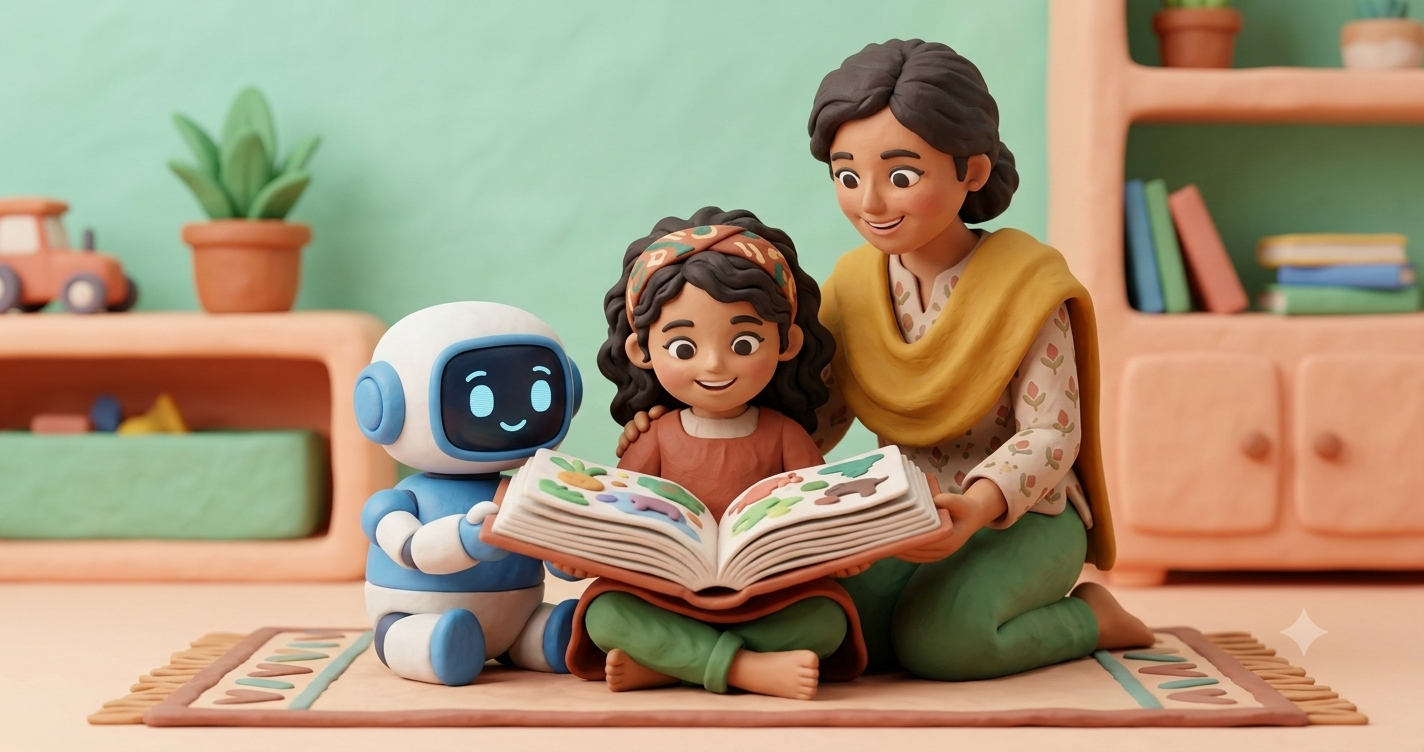
Can AI Teach Your Child to Read? An Honest Answer for Parents (2026)
6 August 2026
The Science of Reading, Explained for Parents: Why Schools Are Changing How Kids Learn to Read
31 July 2026